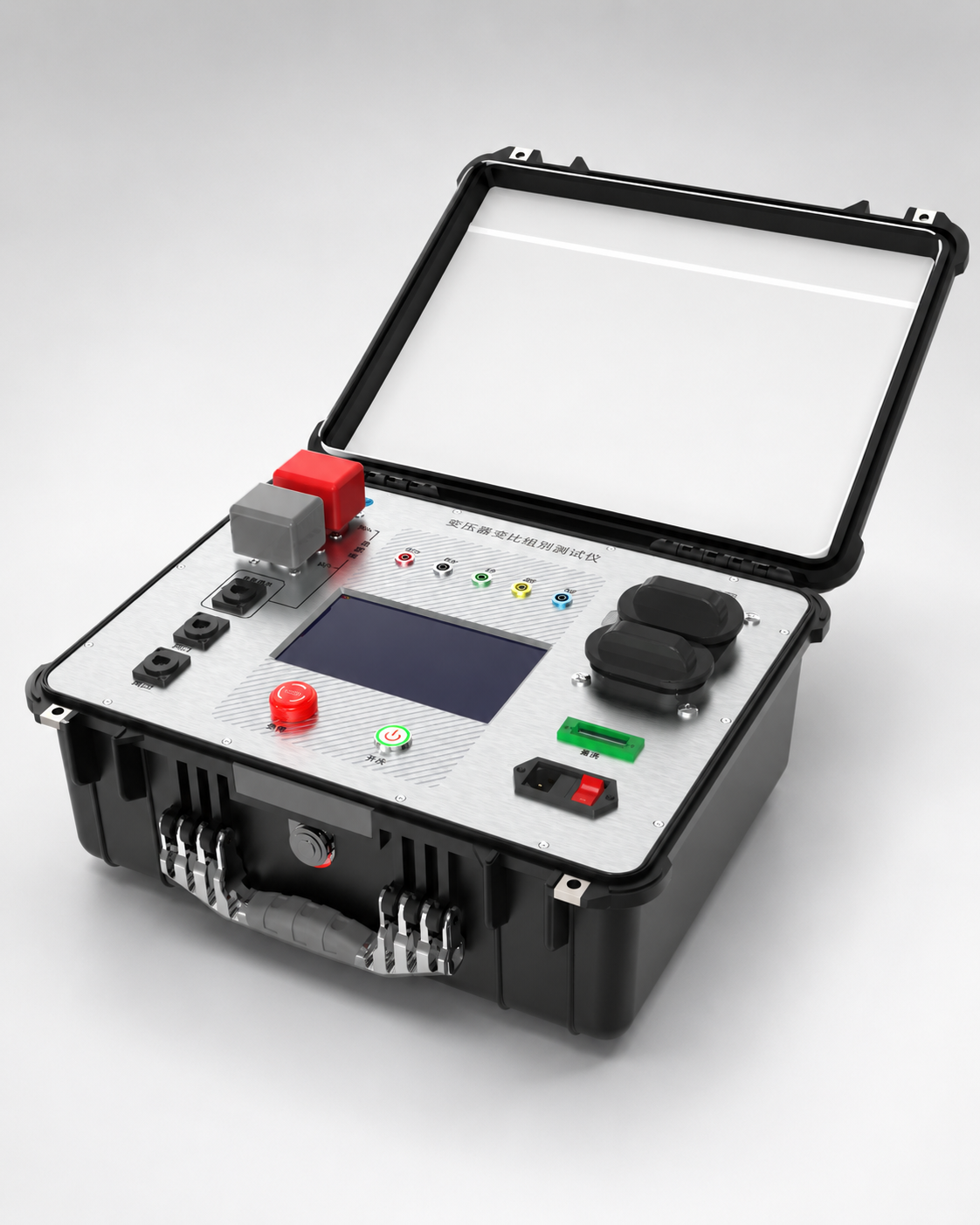
Portable EV Simulator
Simulate the EV. Validate the Charger. Troubleshoot Faster.
Simulate vehicle-side CCS communication and verify DC charger communication, charging sequences, control logic and fault responses—without repeatedly using a real electric vehicle.
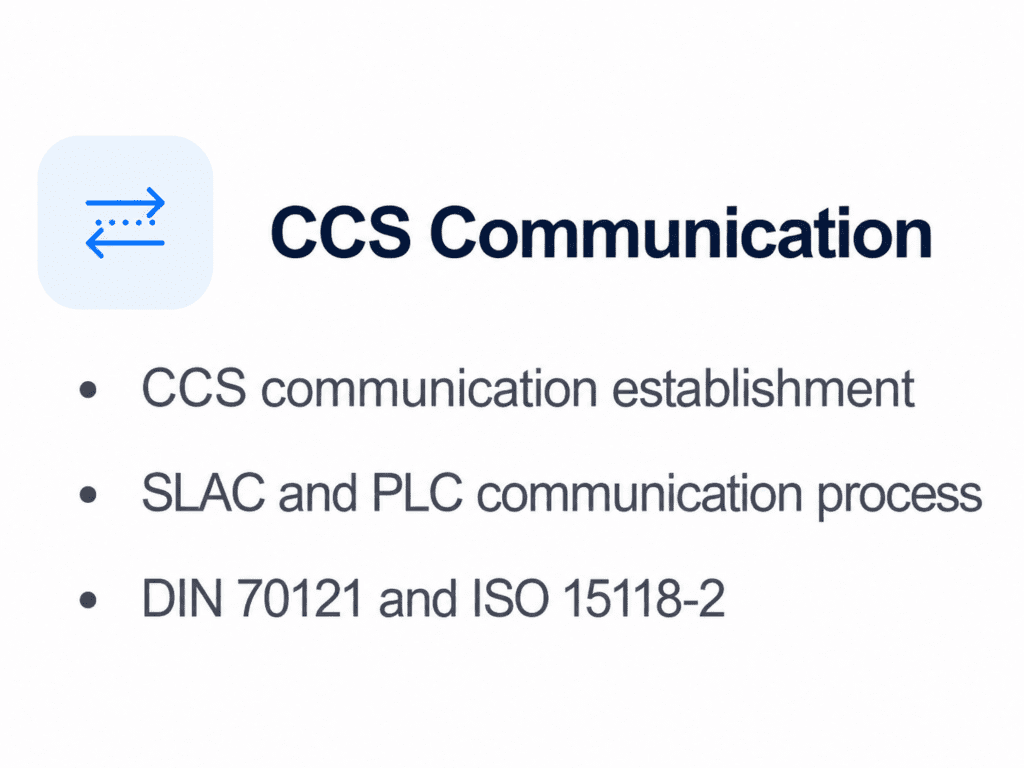
- DIN 70121 ISO
- Simultaneously supports 15118-2/15118-20
- CCS1 CCS2 PLC Communication
- Fault Simulation
- Session Recording
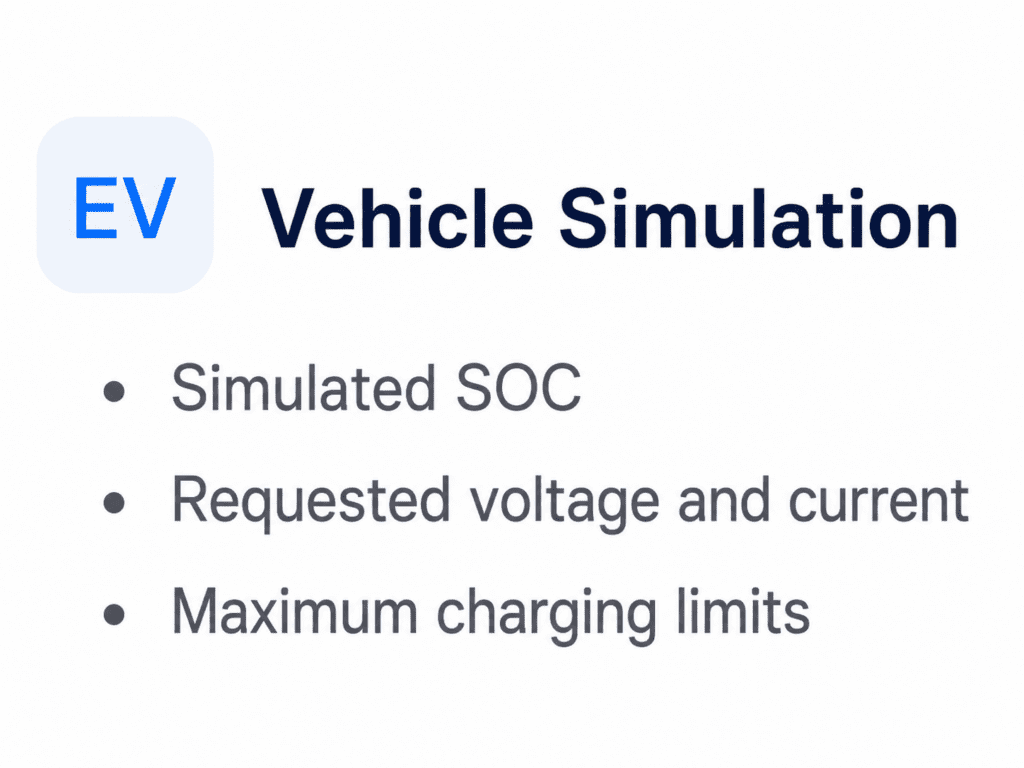
EV-Side Simulation
EVCC behavior and charging logic
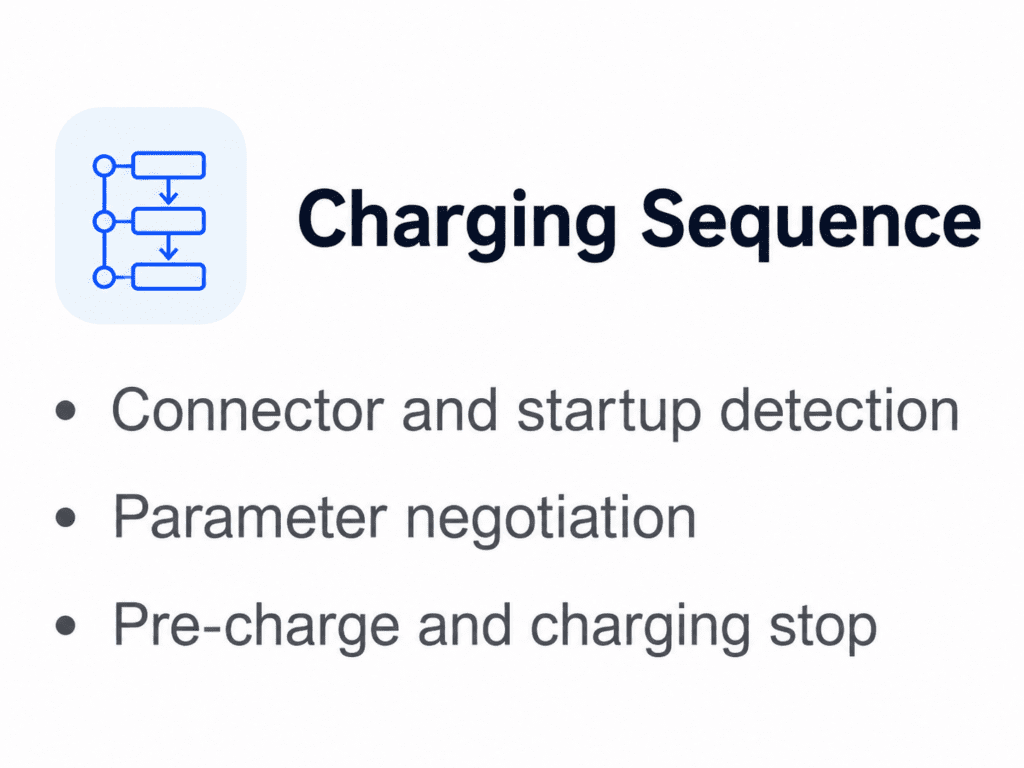
Charging Sequence
Startup, negotiation, pre-charge and stop
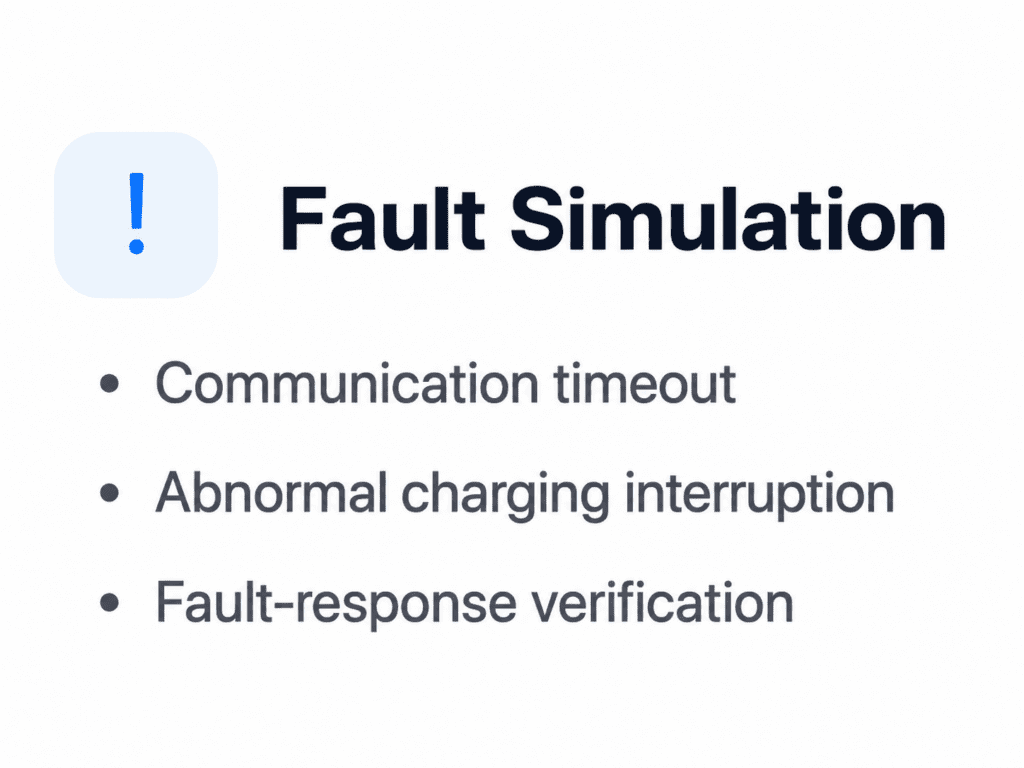
Fault Simulation
Reproduce abnormal charging conditions
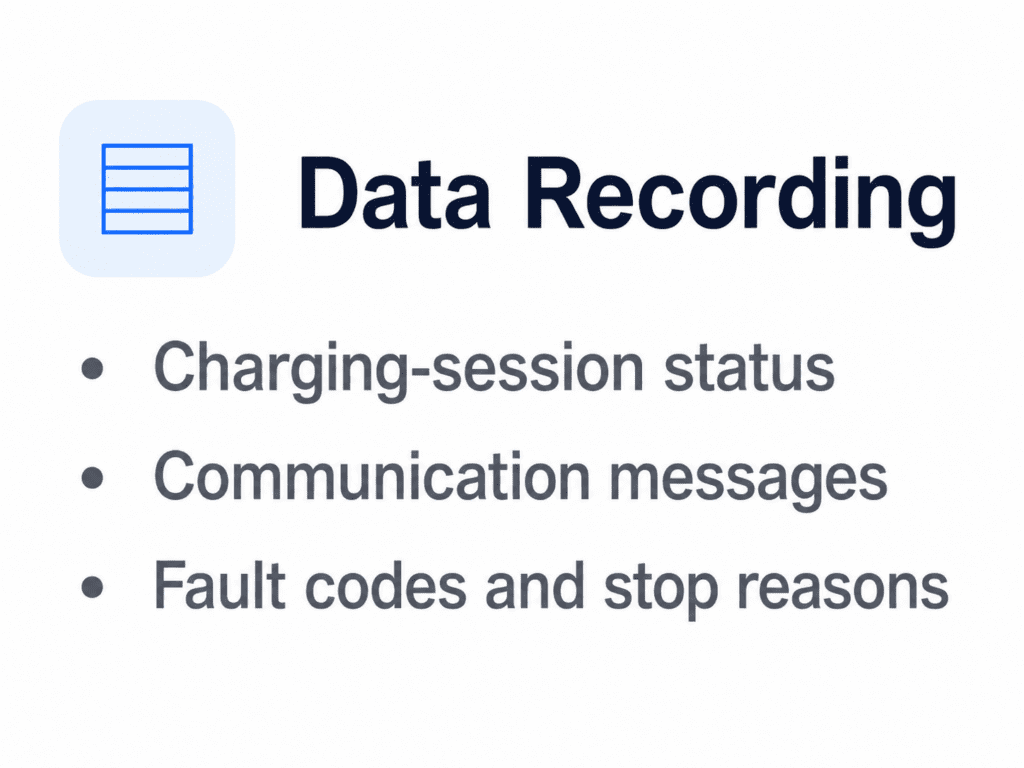
Data Recording
Messages, status changes and fault events
Product Positioning
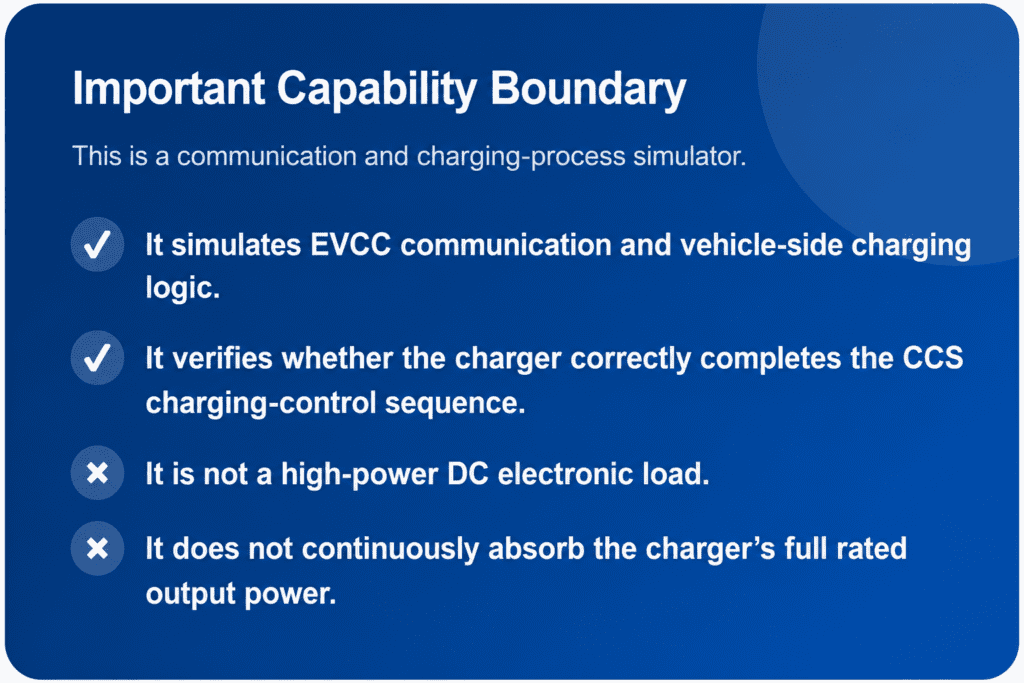
What This Equipment Is—and Is Not
A clear capability boundary helps engineering teams choose the correct test configuration.
Core Capabilities
What Can You Test?
Cover the essential communication, sequence, fault and recording functions required during charger development and field support.
Test Configuration
Communication Test vs Full-Power Test
Select the correct supporting equipment according to your test objective.
Communication & Functional Test
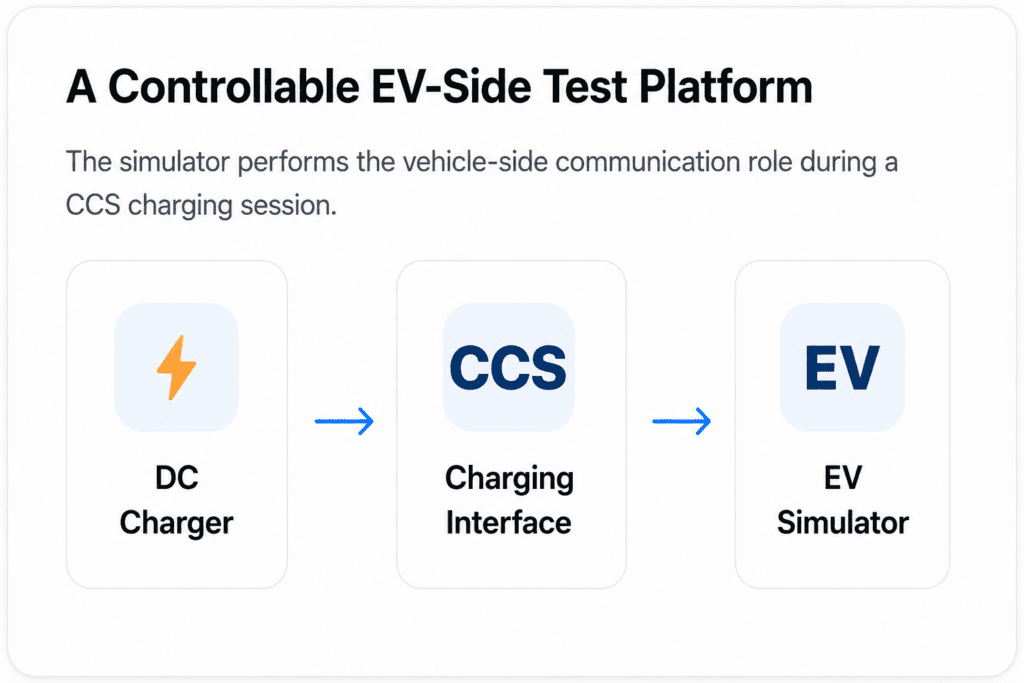
The EV simulator handles the communication and charging-control side of the test.
- Protocol verification
- Charging-sequence testing
- Fault simulation
- Session recording
- Factory functional inspection
- Site troubleshooting
Full-Power Output Test
An external DC load, battery system or dedicated charger test platform must absorb the charger output power.
- Full-power output testing
- Load and efficiency testing
- Thermal testing
- Output stability testing
- Communication and power combined verification
High-Voltage Safety
Connection and Measurement Notes
Use the simulator together with the appropriate professional instruments and an approved safety procedure.
High-Voltage Connection
The simulator can connect through the CCS charging interface for communication and charging-process verification. The actual high-voltage connection method depends on the selected configuration and test setup.
High-Voltage Measurement
The standard configuration focuses on communication, charging-process control and charger-response verification. It is not intended to replace calibrated high-voltage measurement equipment.
Protocol Support
Configure the Tester for Your Project
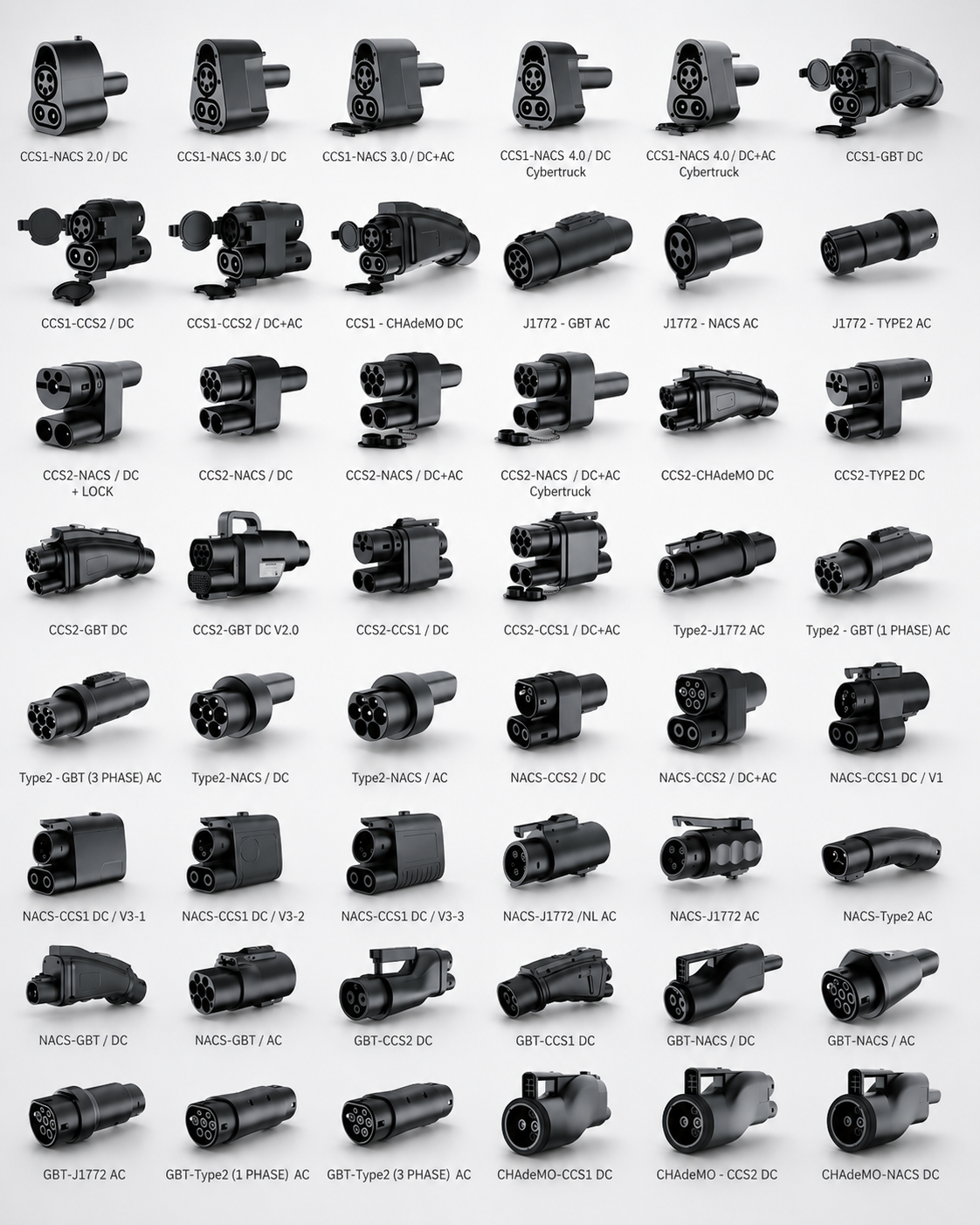
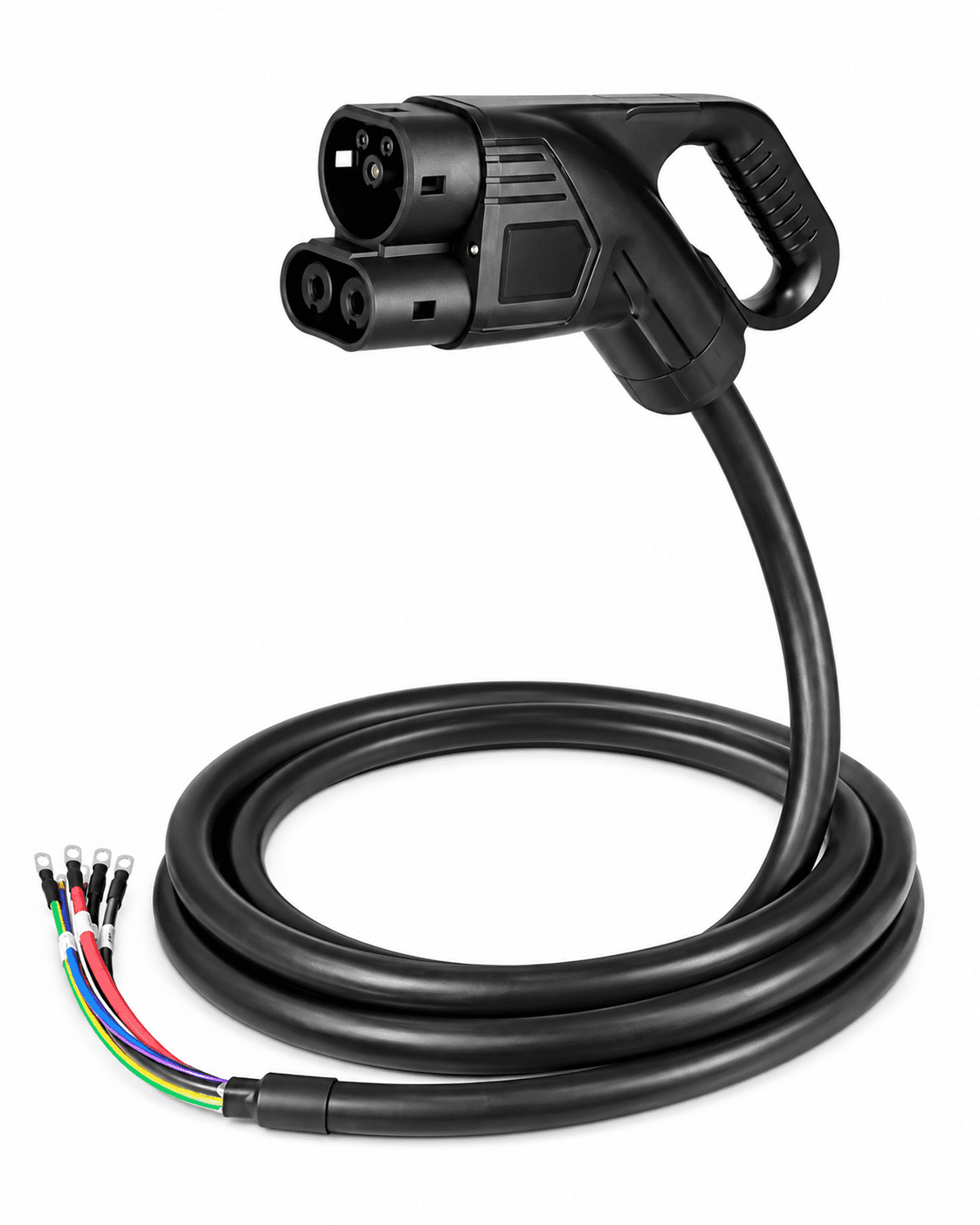
CCS1 and CCS2 configurations are available. The connector, charging cable and software configuration are supplied according to the ordered version.
Applications
Designed for Factory and Field Engineering
Use one portable platform across product development, production inspection, commissioning and service.
Charger Manufacturer
Verify communication, charging sequences and controller logic during product development.
SECC Developer
Debug EVSE controller communication and reproduce abnormal sessions in a controlled environment.
Charging Operator
Confirm charger operation during site commissioning and after maintenance.
Field Engineer
Reproduce customer-reported charging failures without waiting for a compatible EV.
Product Overview
Technical and Supply Information
Final functions and package contents should be confirmed in the quotation and technical agreement.
Standard Package
Package contents should be confirmed against the final ordered configuration.
| Item | Specification / Description |
|---|---|
| Operating Voltage | AC 220V ±15% |
| Display | 10-inch touch screen |
| Operating Temperature | -30°C to 70°C |
| Test Object | European standard, American standard, and NACS DC charging stations |
| Maximum Test Voltage | DC 1000V |
| European / American Communication Protocols | Charging communication complies with ISO 15118 and DIN 70121. Power transmission complies with IEC 61851. Vehicle inlet complies with IEC 62196. |
| Interface Design | Touch screen design with freely configurable charging standard interfaces. European and American interfaces support both AC and DC applications. |
| User Interface | Simple and intuitive interface with bilingual Chinese and English support for easy operation. |
| Message Storage | Real-time recording and USB export of CCS1/CCS2 charging-session data, including PLC communication logs, protocol messages, charging states, timestamps, warnings and fault events for ISO 15118 and DIN 70121 analysis. |
| Vehicle Message Simulation | Vehicle-side message content and message cycles can be fully configured to simulate various vehicle communication scenarios. |
| Communication Data Acquisition | European and American standards can obtain communication data directly through the EVCC host computer using a CAN box. |
| Automatic Aging Test | SOC can automatically increase, and charging duration can be set to enable automatic aging test functions. |
Contact Share Charging
Email Us
Contact us for partnership opportunities at
zhaishuoyun@share-charging.com
Whats APP
Discuss your project with our team at +8615253120062
Visit Us
FAQs
Common Questions Before Ordering
No. The standard portable version is mainly an EV-side communication and charging-process simulator. It does not continuously absorb the charger’s full rated output power.
Yes. It simulates the main EV-side communication and charging-control process, allowing engineers to perform functional and communication tests without repeatedly using a real EV.
Communication testing is generally independent of charger power, provided that voltage, connector and protocol are compatible. Full-power testing requires an external load, battery system or dedicated test platform.
CCS1 and CCS2 configurations are available. Whether one unit includes both interfaces depends on the ordered hardware configuration and connector package.
The standard configuration can support DIN 70121 and ISO 15118-2. ISO 15118-20 and advanced functions should be confirmed according to the selected product version and project scope.
Yes. Fault scenarios, charging parameters, communication interfaces and test workflows can be evaluated according to the charger platform and project requirements.
A portable EV simulator helps engineering teams reproduce vehicle-side behavior during charger development, factory inspection, site commissioning, and troubleshooting. It supports more predictable testing of charging startup, communication negotiation, fault cases, plug status, session logs, and interoperability before a charger is delivered to the customer.
The testing workflow can support teams working on CCS2 charging solutions, CCS2 charger controllers, DIN70121 communication modules, ISO15118 communication stacks, EVCC SECC communication solutions, and OCPP plus ISO15118 integration. For international projects, this validation step can reduce charger compatibility problems and shorten debugging cycles.
The simulator is designed for practical use by EV charging system manufacturers, charger OEM and ODM teams, field engineers, charging infrastructure operators, and technical service partners. It helps teams identify whether a problem comes from the charger controller, communication module, vehicle-side behavior, cable connection, backend process, or installation environment.