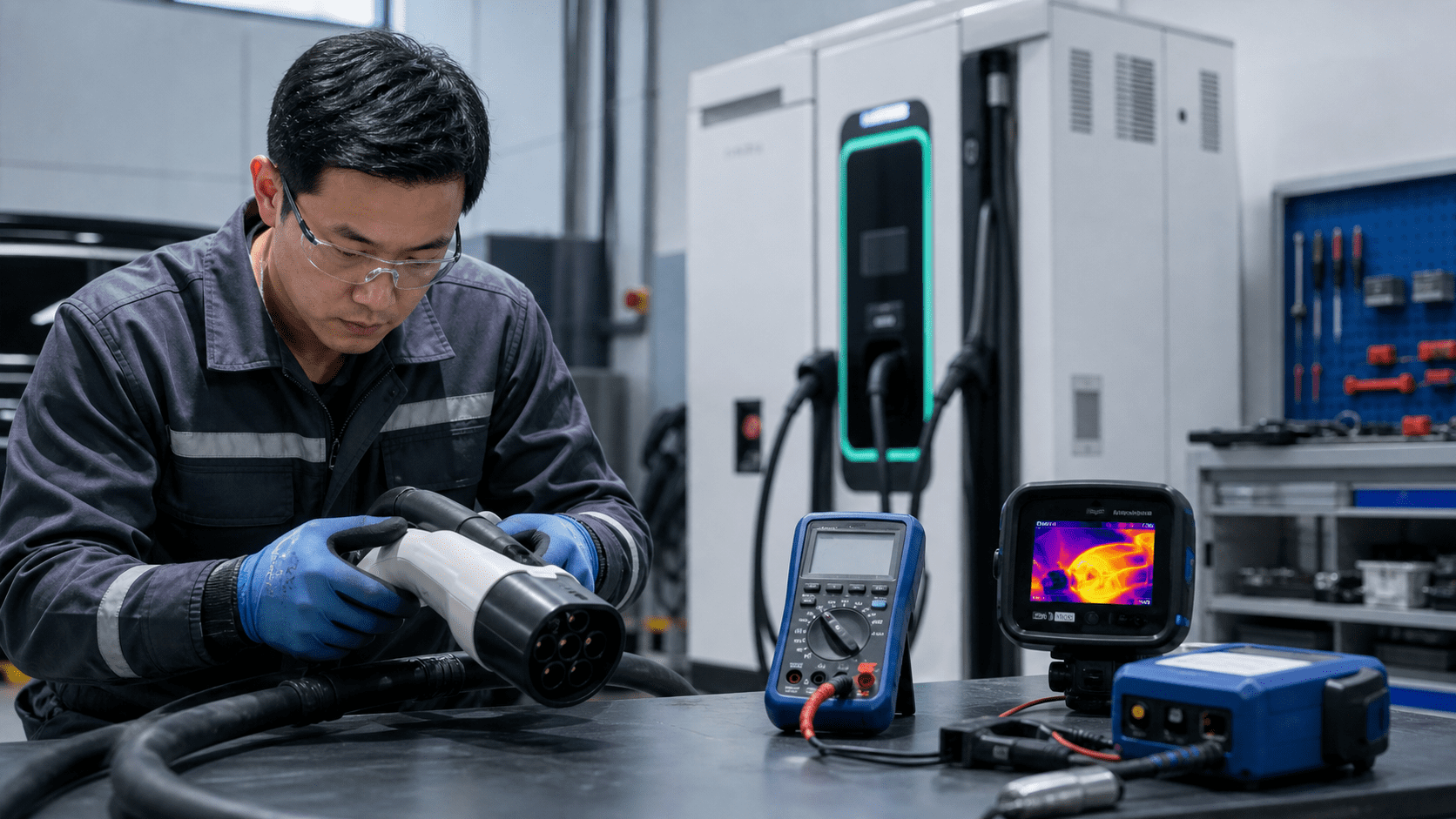
High-power DC charging faults should be handled with a safety-first mindset. Connector temperature alarms, insulation faults, leakage detection warnings, contactor errors, and emergency stop events all protect the user, vehicle, and charging equipment.
For connector temperature issues, check the charging cable rating, connector sensor position, contact resistance, plug wear, cable bending, ambient temperature, and cooling condition. A temperature alarm is often a symptom of mechanical wear or poor contact, not only an electrical design problem.
For insulation-related faults, review the sequence before and during output. Moisture, damaged cables, vehicle-side leakage, cabinet contamination, and wiring mistakes can all trigger the fault. The goal is not only to clear the alarm, but to identify whether the issue is design, assembly, aging, installation environment, or vehicle compatibility.