
As globalization continues to accelerate, Chinese new energy vehicle manufacturers are moving faster into overseas markets.
However, different countries and regions have different standards and regulations for electric vehicles and EV charging systems.
EVCC, or Electric Vehicle Communication Controller, is the communication controller installed on the electric vehicle side. It is responsible for exchanging information with the charging station-side SECC, enabling charging start, power negotiation, status monitoring, and safety authentication.
It can be understood as the “charging brain” of an electric vehicle, controlling the entire charging process.
To ensure that vehicles can successfully enter overseas markets, EVCC testing based on local standards has become extremely important.
Traditional testing often relies on real vehicles. However, this method is limited by vehicle environments, charging connectors, and charging station resources. It also has problems such as low test coverage, low fault detection rate, and low efficiency, making it difficult to meet overseas conformance testing and functional testing requirements.
Share Charging supports automated EVCC testing and provides testing solutions to meet customer product development requirements.
1. Test Requirements
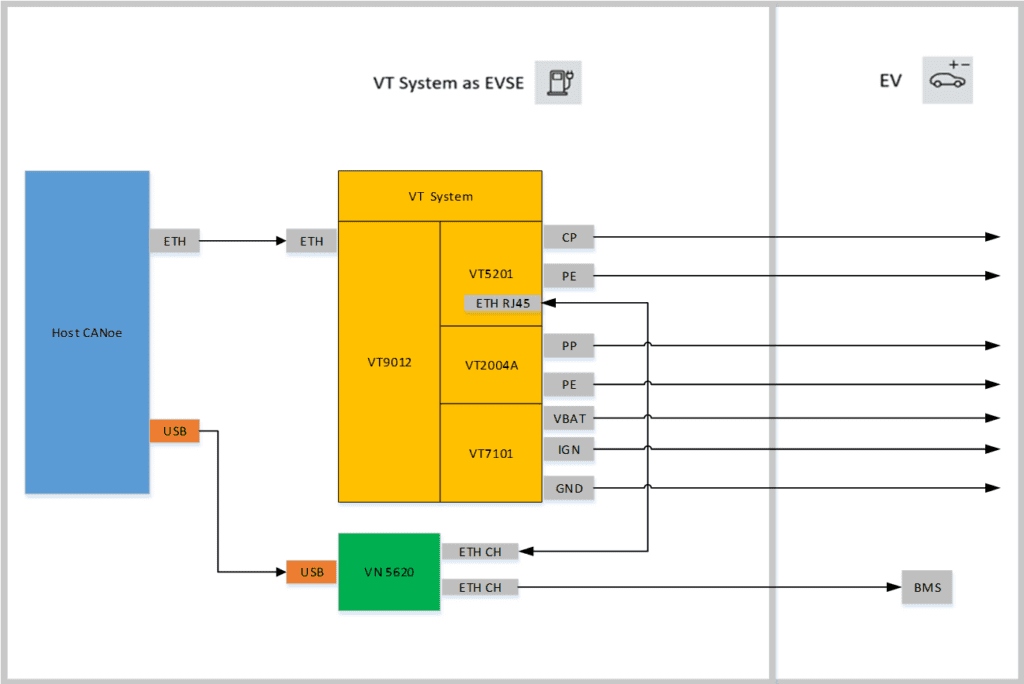
The goal is to build a complete EVCC charging test simulation system.
The system can be used for simulation testing of European charging protocols, including ISO 15118-4, ISO 15118-5, ISO 15118-20, and DIN 70121.
The solution can also provide customized development services related to the test system, including but not limited to hardware port control, test case development, test script development, and other functions.
This helps meet EVCC charging function protocol conformance testing requirements and enables rapid development and debugging of test cases during EVCC development.
The system also needs to complete port path debugging and system integration debugging for all devices to ensure stable operation of the complete test system.
2. Test Solution
To meet the requirements of EVCC automated testing, Share Charging provides an efficient EVCC testing solution covering the full process from simulation to test result analysis.
[Image: Overall architecture diagram of the EVCC charging test system]
3. Core Components
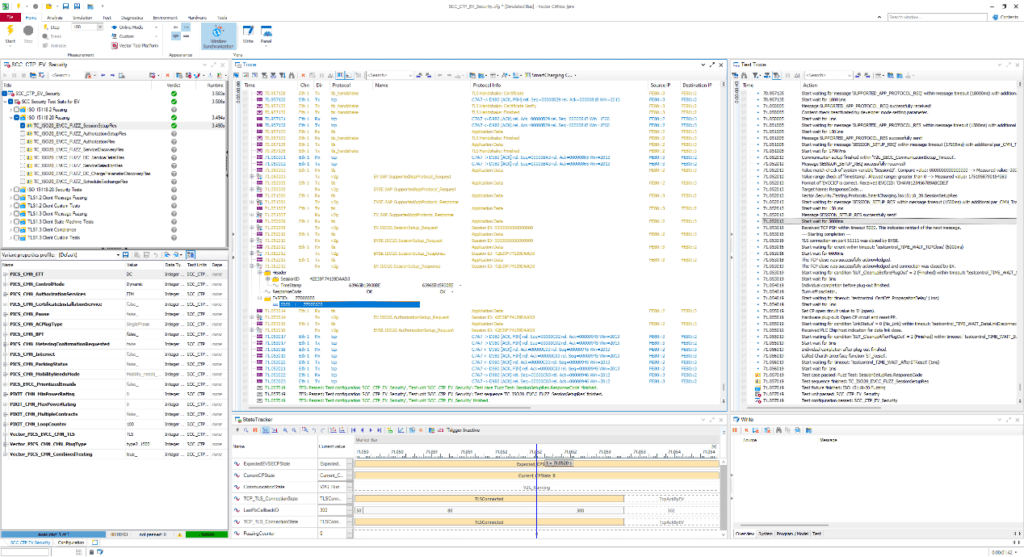
CANoe Basic Environment
The minimum required version is CANoe 17.0 SP3.
The required functional modules include:
Option.SmartCharging
Supports simulation and testing of charging protocols such as ISO 15118-2, ISO 15118-20, and DIN 70121.
Option.Ethernet
Supports Ethernet communication analysis and PLC data parsing.
Test Case Development Tool
vTESTstudio 8.0 SP3 or later can be used to edit and modify test cases.
It also supports CAPL and Python script integration.
Power Line Communication Hardware
The system includes PLC hardware for charging communication simulation and analysis.
VT System Boards
VT system boards are used for hardware signal simulation, input and output control, and test environment construction.
Ethernet Communication Interface
The Ethernet communication interface is used for data exchange and analysis during charging communication testing.
Test Software Package
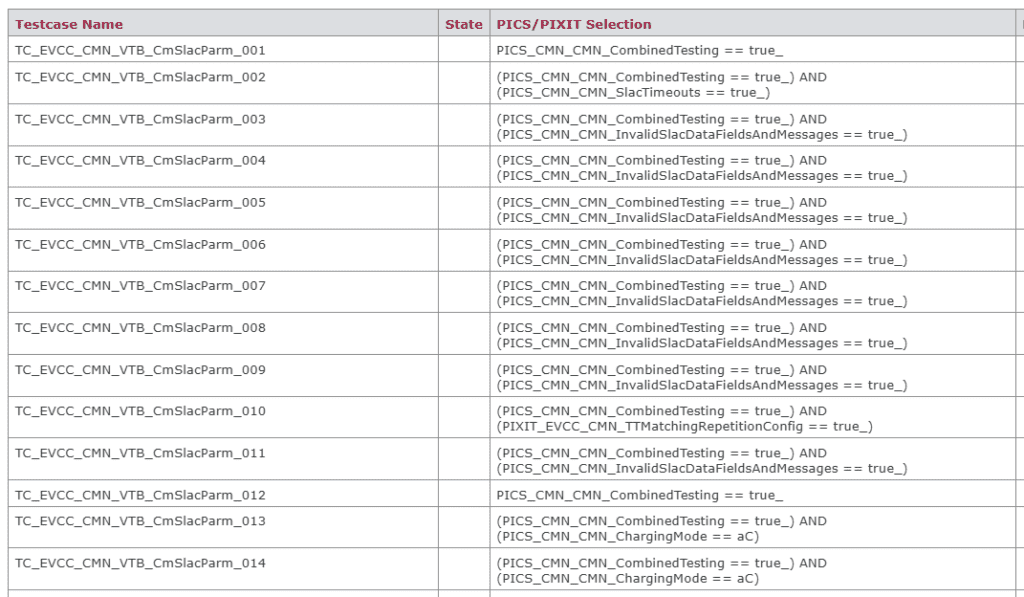
The CANoe Test Package EV – CCS, also known as CTP, provides conformance testing based on DIN 70121, ISO 15118-4, and ISO 15118-5.
It also provides basic test cases for the ISO 15118-20 message set.
4. Test Content
ISO 15118-2 and DIN 70121 V2GTP Testing
The test content includes V2GTP header consistency testing, invalid payloadLength testing, invalid payloadType testing, invalid protocolVersion testing, invalid invProtocolVersion testing, and other related items.
ISO 15118-2 and DIN 70121 SDP Message Testing
The test content includes Security and TransportProtocol consistency testing, SDP retransmission count testing, asynchronous SDP response testing, and other related items.
ISO 15118-2 and DIN 70121 V2G Application Layer Message Testing
The test content includes application-layer response code testing, CP state transition testing, and other related items.
[Image: EVCC automated charging test process and result analysis interface]
5. Test System Results
Improved EVCC System Stability
Through automated testing, the EVCC can be verified under different charging environments.
This helps improve the safety and reliability of the user charging process.
Faster Market Response
Automated testing can greatly shorten the test cycle.
It also helps vehicle manufacturers respond faster to EVCC system performance optimization requirements and strengthen their technical competitiveness in the intelligent vehicle industry.
Lower Testing Cost
The EVCC automated testing solution from Share Charging optimizes the performance verification process of the communication controller.
This can significantly reduce time costs and labor costs.
Wider Coverage of Special Working Conditions
By simulating fault feedback during the testing process, the system can verify the stability and compatibility of the EVCC under various extreme operating conditions.
6. Conclusion
Although EVCC testing for vehicles remains challenging, Share Charging will continue to explore advanced testing technologies and provide customers with more excellent solutions.
The above content is from Share Charging.