Are Share Charging’s hardware products compatible with all electric vehicles?
Since our establishment in 2019, our products have entered a mature stage of mass production. All SECC and EVCC products have undergone extensive field installation and testing, and their compatibility has been verified from multiple perspectives.
Share Charging’s charging station main control boards (such as the JC-6536 model) achieve compatibility with multiple EV brands mainly through the following technologies:
⚙️ I. Core Compatibility Technologies
1. Multi-Protocol Integration and Automatic Identification
The main control board has built-in support for the GB/T 27930-2015 communication protocol and is deeply compatible with the private BMS (Battery Management System) protocols of mainstream brands such as Tesla and BYD.
By automatically identifying the vehicle model and charging requirements, it dynamically adjusts charging parameters (such as voltage and current), solving matching issues caused by protocol differences.
2. Modular Hardware Design
It adopts an open-interface design, making it compatible with power modules from different manufacturers such as Huawei, Infy Power, and Megmeet, ensuring hardware-level versatility.
It integrates key functions such as control pilot circuitry, insulation detection, and temperature monitoring, reducing dependence on external expansion components and adapting to various charger structures, including AC chargers, DC chargers, and liquid-cooled chargers.
3. Software-Defined Hardware Capability
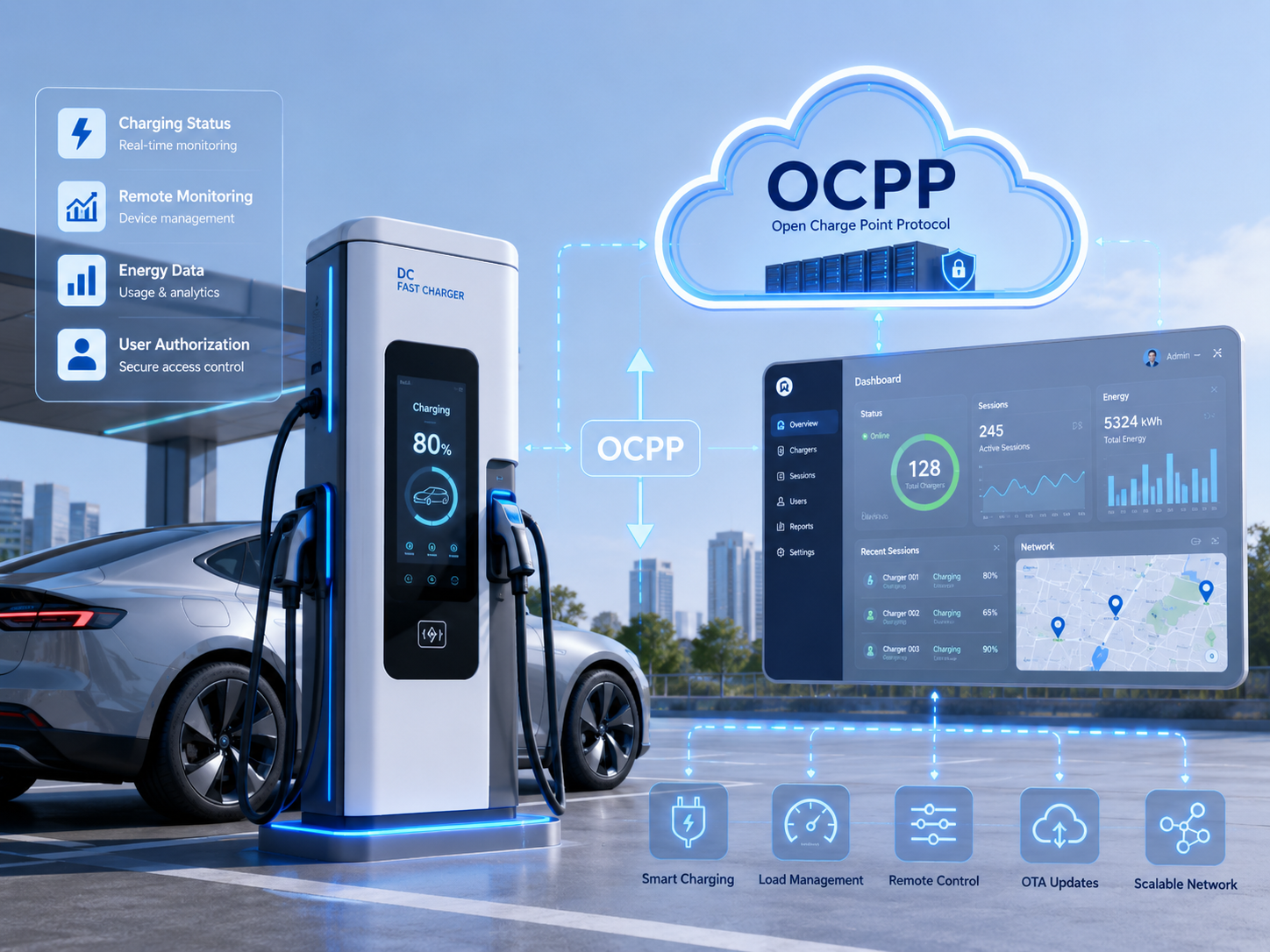
Powered by the PN-OS embedded system, it supports remote OTA upgrades, enabling timely updates of communication protocols and charging strategies for new vehicle models.
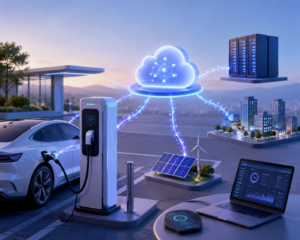
It also reserves multiple communication ports, including Ethernet, 4G, and Bluetooth, making it easy to connect to cloud platforms and obtain vehicle compatibility data.
🛡️ II. Safety and Stability Assurance
1. Real-Time Safety Protection
It integrates overcurrent, overvoltage, and short-circuit protection mechanisms, while online insulation detection ensures safety in high-voltage environments (DC1000V+).
It also monitors charging gun temperature in real time to prevent overheating risks.
2. Compatibility Testing and Validation
It strictly complies with the national standard GB/T 18487.1-2015 and has passed real-vehicle testing with multiple brands, such as Tesla, NIO, and BYD.
Laboratory data shows that protocol switching response time is controlled at the millisecond level, reducing the probability of charging interruptions.
🔧 III. Supply Chain Collaboration Support
Open Cooperative Ecosystem
It maintains deep cooperation with automakers and charging operators (such as Yunkuai Charging and the State Grid platform), sharing vehicle adaptation data and continuously optimizing the protocol database.
It also supports integration with mainstream third-party monitoring platforms, enabling centralized management of cross-brand charging stations.
⚡ IV. Practical Application Results
Case Verification
Actual testing shows that the Jianchong main control board can provide stable charging for Tesla vehicles (with an adapter), BYD, NIO, and other models, achieving a compatibility efficiency rate of 98%.
Cost Control
Through its highly integrated design, it reduces the need for additional hardware such as adapters, thereby lowering users’ compatibility costs.
💎 Summary
Through a comprehensive solution that combines deep protocol compatibility + modular hardware + remote upgrade capability + a closed-loop safety protection system, Share Charging has achieved broad compatibility of its main control boards with multiple EV brands. Its technical core lies in using software flexibility to compensate for hardware differences, while continuously expanding compatibility through an open ecosystem