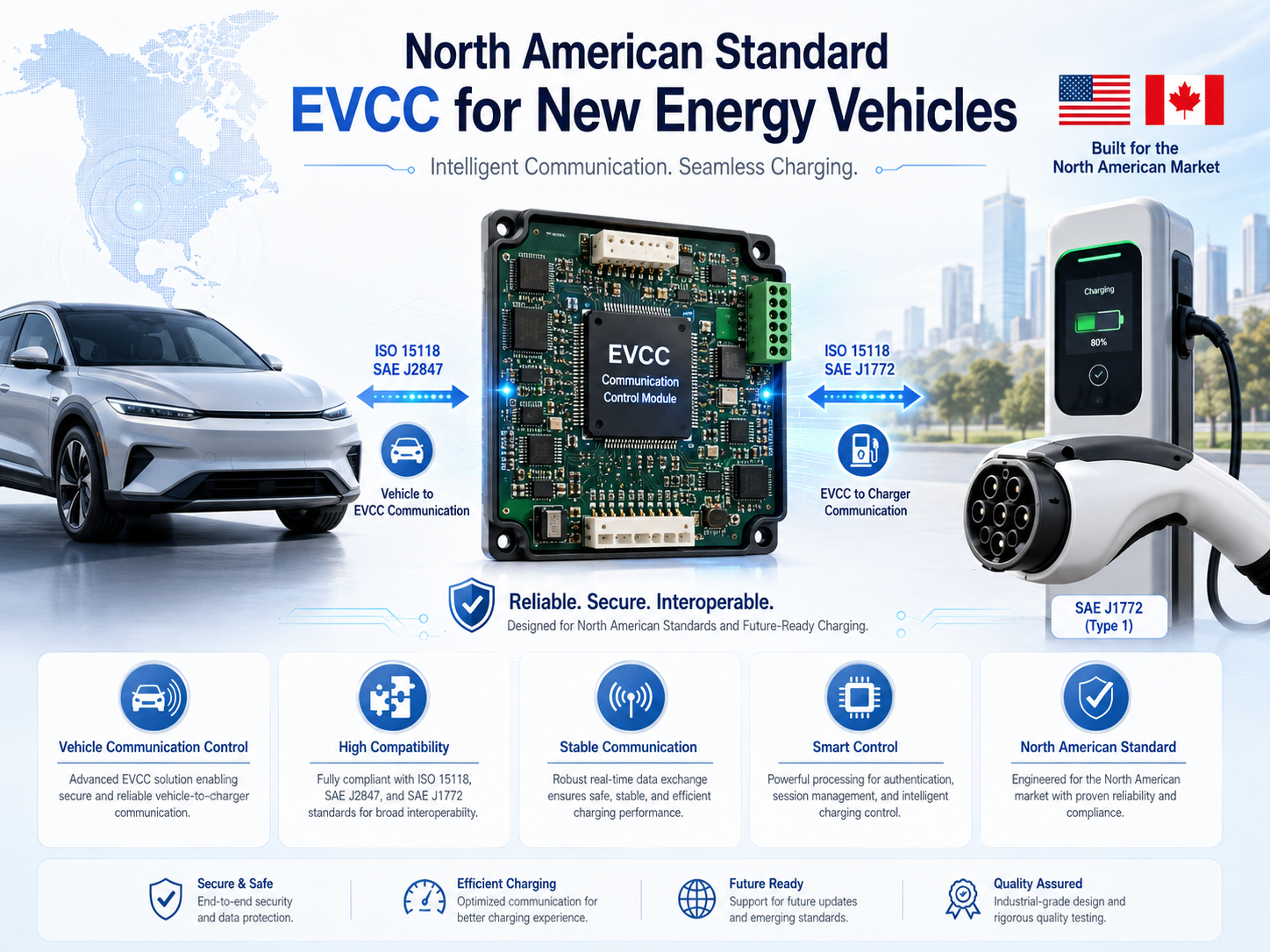
EVCC, short for Electric Vehicle Communication Controller, is the core communication component between an electric vehicle and charging equipment. It is responsible for intelligent management and control throughout the charging process.
Main Functions of EVCC
Charging Protocol Communication
EVCC supports international charging protocols such as ISO 15118 and GB/T 27930.
It communicates with the charging station’s SECC — Supply Equipment Communication Controller — to negotiate charging parameters, including voltage, current, power, and other key charging data.
Identity Authentication and Payment
EVCC can complete identity recognition and payment authorization through PLC, or Power Line Communication, as well as wireless communication methods.
For example, it can support Plug & Charge, allowing the vehicle to automatically identify itself and start charging without manual operation.
Charging Process Monitoring
During the charging process, EVCC monitors real-time charging status, including SOC, temperature, fault information, and other vehicle or battery conditions.
This helps ensure that the charging process is safe, stable, and reliable.
V2G Communication
In bidirectional charging scenarios, EVCC can support V2G, or Vehicle-to-Grid communication.
This allows energy exchange between the electric vehicle and the power grid, enabling the vehicle to participate in energy storage, load balancing, and grid interaction.