Clear Definition
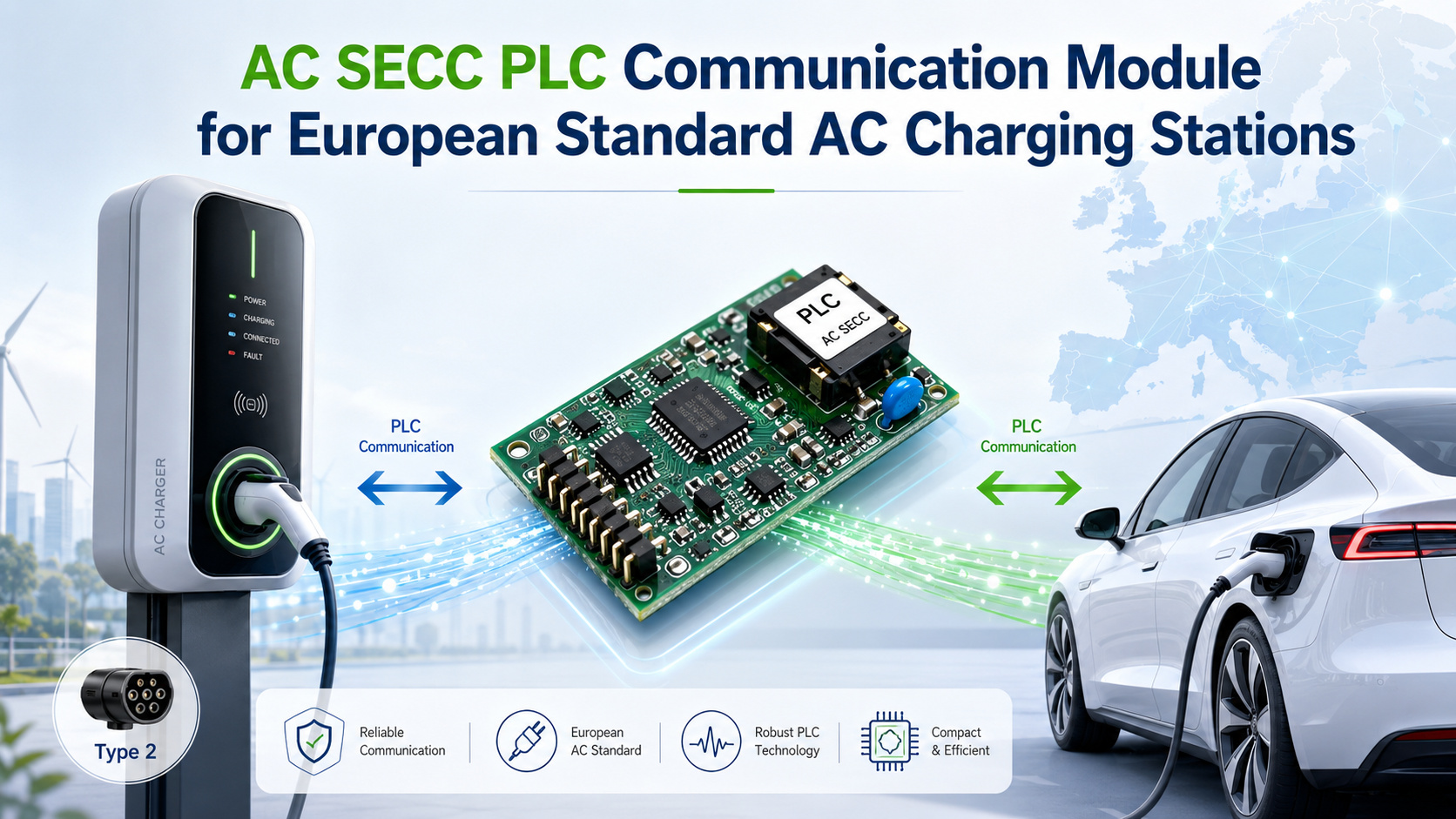
SECC, or Supply Equipment Communication Controller, is the communication controller installed inside an EV charging station. It is responsible for managing the communication between the charging station and the electric vehicle.
In a CCS charging system, the SECC communicates with the vehicle-side EVCC through PLC communication over the Control Pilot line. It helps the charger identify the vehicle, exchange charging parameters, manage the charging session, and ensure the charging process is safe and compliant.
Simply speaking, SECC is the “communication brain” of the charging station.
Application Scenarios
SECC is commonly used in:
Application Description
CCS2 DC charging station Used for European standard DC fast chargers
CCS1 DC charging station Used for North American DC fast chargers
ISO 15118 charging system Supports high-level EV-to-charger communication
Plug & Charge system Enables automatic authentication and charging
Smart charging projects Supports communication for power control and charging session management
Technical Flow
A typical SECC communication process includes:
Vehicle plugs into the charging connector.
Charger detects CP / PP signal status.
SECC starts PLC communication with EVCC.
SECC and EVCC perform SLAC matching.
Protocol negotiation starts, such as DIN 70121 or ISO 15118.
Vehicle and charger exchange charging parameters.
Charger performs insulation check and pre-charge.
Charging starts after all safety conditions are met.
SECC continuously manages charging status and fault messages.
Charging session ends safely.
Product Relationship Diagram
EV Battery / BMS
|
v
EVCC inside EV
|
| PLC communication over CP line
v
SECC inside Charging Station
|
v
EVSE Controller / Power Module / Meter / OCPP Backend
Standard Protocol Explanation
SECC is closely related to the following standards:
Standard Role
DIN SPEC 70121 Basic CCS DC communication
ISO 15118-2 Plug & Charge, smart charging, TLS-based communication
ISO 15118-20 Advanced V2G, bidirectional charging, second-generation communication
IEC 61851 Basic charging control, CP / PP signal logic
OCPP Communication between charging station and backend platform
SECC vs EVSE Controller
Item SECC EVSE Controller
Main role Vehicle communication Charger operation control
Communication target EVCC Power module, meter, screen, backend
Protocol DIN 70121 / ISO 15118 OCPP / Modbus / CAN / internal protocol
Installed side Charging station Charging station
Importance Required for CCS communication Required for full charger control
FAQ
Q1: Is SECC required for CCS DC charging?
Yes. For CCS DC charging, high-level communication is required, and SECC is the core controller that handles this communication.
Q2: Can SECC support both DIN 70121 and ISO 15118?
Yes, depending on the hardware and software design. Many SECC solutions support DIN 70121 and ISO 15118-2, while ISO 15118-20 usually requires a separate development scope.
Q3: Is SECC the same as OCPP controller?
No. SECC manages vehicle-to-charger communication, while OCPP manages charger-to-platform communication.
Share Charging Project Capability
Share Charging provides SECC-related solutions for European standard DC charging projects, including CCS2 communication integration, EVSE controller matching, power module coordination, testing support, and charger-level system integration.
For customers developing CCS2 DC charging stations, Share Charging can provide:
SECC hardware and software matching
CCS2 communication debugging
EVSE controller integration
Power module control logic
Charging process testing
Project-level wiring and system design support