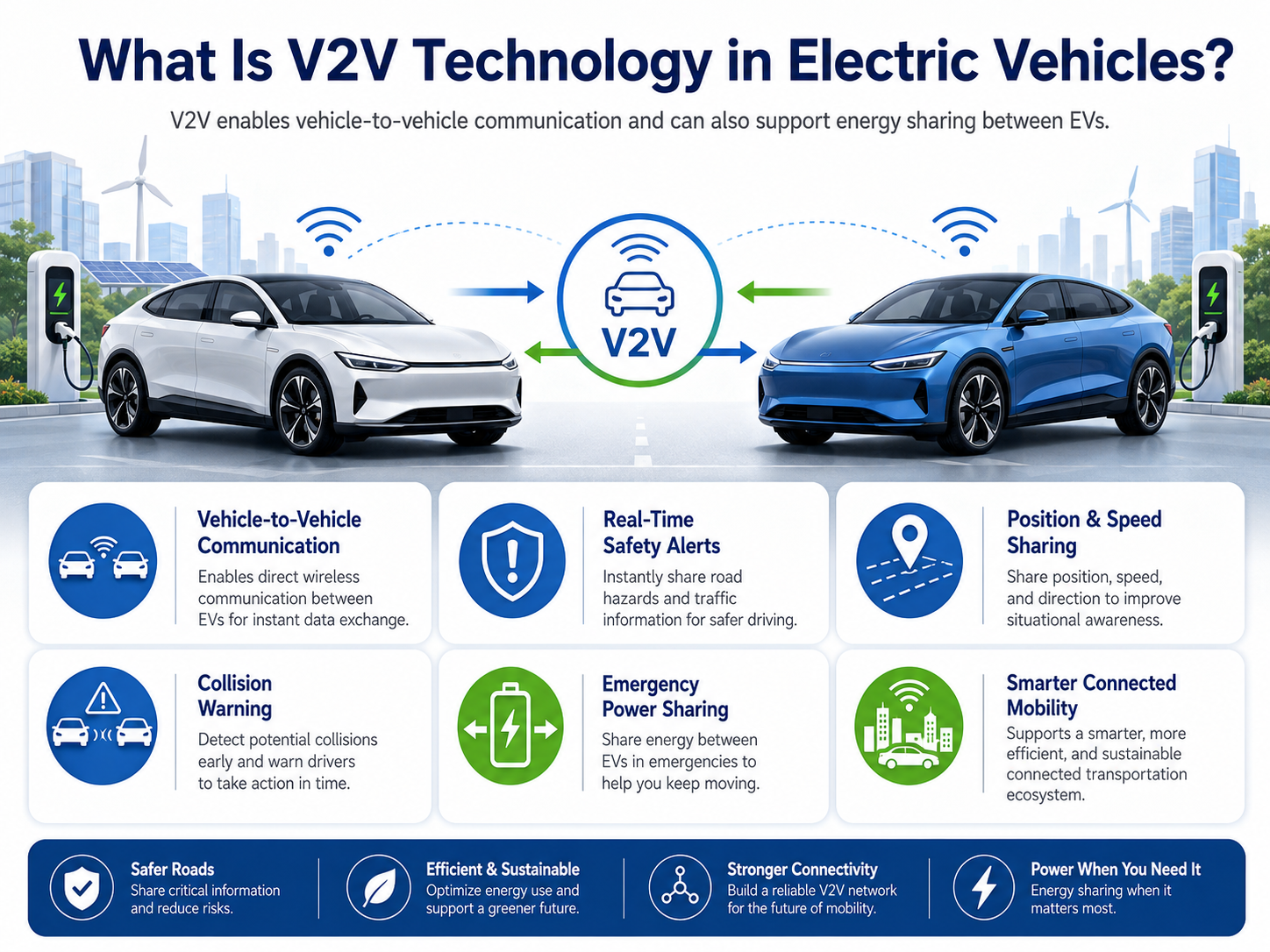
Vehicle-to-Vehicle Charging, also known as V2V Charging, refers to a technology that allows electric vehicles to transfer power directly to each other.
With this technology, one electric vehicle can transfer energy from its battery to another electric vehicle, helping a low-battery vehicle recharge when needed.
How V2V Charging Works
V2V charging is usually completed through the following steps.
1. Connection
Two electric vehicles are connected through a charging cable or wireless charging device.
2. Communication
The vehicles communicate through a charging communication protocol to negotiate charging parameters, such as voltage, current, and charging amount.
3. Charging
Electric energy is transferred from the battery of one vehicle to the battery of the other vehicle.
Technical Implementation Methods
Wired V2V Charging
Wired V2V charging connects two vehicles through a charging cable.
Power transfer is completed through the onboard charger or external charging equipment.
Wireless V2V Charging
Wireless V2V charging uses wireless charging technology.
Energy is transferred through electromagnetic induction or magnetic resonance without a physical cable connection.
Application Scenarios of V2V Charging
Emergency Rescue
When one electric vehicle runs out of power, another electric vehicle can provide emergency charging support.
Fleet Management
In fleet operation scenarios, vehicles can charge each other to optimize the overall use of battery energy.
Remote Areas
In areas without charging infrastructure, vehicles can support each other through V2V charging.